“If you think along the lines of nature, then you think properly.”
So why this quote?

Looking back, I can’t remember a time that the beauty and versatility of nature wasn’t a source of peace and inspiration for me. As a child I collected leaves and flowers for drying and scrapbooking. Endless summer days at the beach were spent digging around in the sand, looking under every rock for treasures like shells and stones, often finding various forms of (semi)aquatic life to study until the tide came in. After school I couldn’t wait to get back outside, whiling away the time high up in a tree, just sitting there, observing the birds, feeling the gentle sway of the branches in the wind. My drawings and paintings were of whatever the likes of David Attenborough and Jacques Cousteau had shown me in their most recent documentaries or what I had encountered on those long walks with my mother through the woods and dunes.
One of the reasons this Carl Jung quote resonates so deeply with me is the simplicity and matter-of-factness of it. Thinking along the lines of nature leads to a deeper understanding of everything within and without. After all, we cannot truly understand something unless we understand its nature. Just like we cannot live a conscious life without knowing our subconscious. Just like our perception of self can’t be truthful if we ignore our shadow. There is no one without the other. Thinking along the lines of nature is, to me at least, as much a philosophy of life as it is psychology.
Residing comfortably at the very beginning of the ASD spectrum, I – as a neurodivergent – tend to take an interest in things somewhat differently from a neurotypical person, more specialised, in some cases. Applying science, biology, chemistry and psychology to the human condition and discussing the resulting experiences or possible outcomes is just one of many of those “special interests”. Others randomly include – but aren’t limited to – the intelligence of the Corvid family of birds (particularly ravens), natural horsemanship, the dietary needs of obligate carnivores (specifically cats), the art of M.C. Escher and Kandinsky, books by C.S. Lewis, Douglas Adams and Terry Pratchett and the music of Pink Floyd, Armin van Buuren and Ludovico Einaudi.
Graphic design and photography are also on that list. Quite high up in fact. This website is here to showcase my mainly photographic explorations in the various worlds of man and of nature, hoping to find the places where they overlap and merge, hoping to capture an image of the moment that life becomes art or art becomes life. Most albums, like the Nature and Objects albums, are self explanatory. In the Art Archive are a few early pieces that have survived the several house moves, equipment failures and emotional floods and fires of yesteryear. The Specials are maybe less obvious in title but all the more in content: Ailurophilia, for instance, is about cats and Melophilia holds everything related to music.
On the subject of music: when I hear sound, I see lights, colours, shapes and images. Listening to music I can see stories unfold, feel movement, notes can cut and carve, melodies and harmonies can soothe and heal. It was a long time before I realised that this is not the default state in which everybody experiences music. Synesthesia (chromesthesia) is a wonderful thing, though it can also make some moments and experiences a bit too intense or immersive at times one might not want them to be. It can get distracting… As a dj I mix by shape and colour. It also works the other way around: images and colours have certain audible frequencies, though for me not nearly as present and intense as starting with the music. This could explain in part why I’m a better dj than a producer ;).
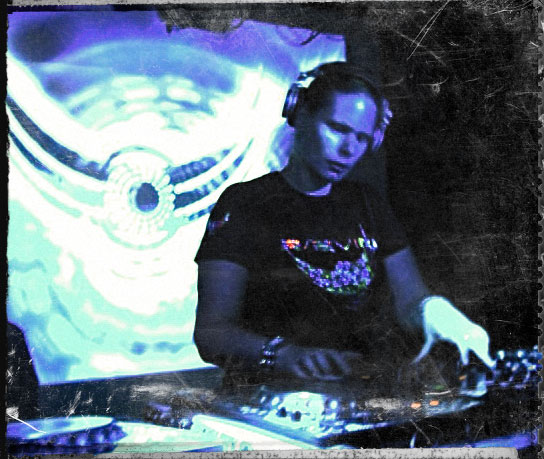
When I was starting out as a dj some 20+ years ago, I had a side gig of being the unofficial party photographer for various (fan)sites. It seemed a natural progression: if I wasn’t going to be in the line-up then the next best thing would be to document the night through photos and videos, the latter often used for IDing the unknown tracks for sites/forums like Tiestotracklists.net. Many nights (and days) were spent at gigs, camera in hand, recording the antics of djs like Tiësto, Ferry Corsten, Armin van Buuren and Markus Schultz, frequenting clubs like Marcanti, Melkweg, Escape, Paradiso, Matrixx, Eau, Now&Wow, Ocean Diva, Hemkade and Lexion, and exploring festivals like Dance Valley, Impulz Outdoor and Mysteryland. Together with a small group of diehards I even followed my favourite djs around abroad to venues in Sheffield, Birmingham, Paris, Antwerp, Vienna and Prague. With no budget to speak of, I could then stretch to a Fujifilm Finepix digital camera the size of a brick with a whopping 1.3 megapixel resolution. A few other brands/types of camera later I ended up with a Sony DSC T100, which gave the best audio/video in these harsh conditions and was tiny enough to get through security as professional gear wasn’t allowed most of the time. A strange thought when today most of us carry around this massive amount of computing power with tiny lenses and mega resolution in a multi-purpose device that far surpasses the speed and quality of all the digital cameras (and laptops, for that matter) you would at that time have been able to carry with you…
So I am happy to say times have changed; until quite recently I used a Canon EOS-series body with Sigma and Tamron lenses, but I’m currently in the middle of switching to a Sony mirrorless setup, very much looking forward to sinking my teeth into an Alpha with a side dish of Samyang! Also I must confess that another favourite bit of photography equipment is my iPhone: it’s always near and ready, just what you need when there is this one shot that you just can’t miss but you’re not carrying the big guns around.
TLDR: it’s mostly photos of stuff and some artsy things with a bit of graphic design and prose thrown in here and there. Feel free to browse around the albums and if you have any questions or comments, let me know.
Alis Corvi!
